Romanian Historical Figures: Uncover the People Who Changed the Past


Diana Condrea


Romania would be a very different place today if it wasn’t for the courage, enthusiasm, and dedication of people who had the power or seized the moment to change its course. They are the greatest Romanian historical figures, some forgotten or less known today after decades of communist propaganda against them.
Our timeframe starts from the second part of the 19th century and includes those people whose positive impact had a major long-term impact.
Discover the people who made the history of Romania.
1. The Royals
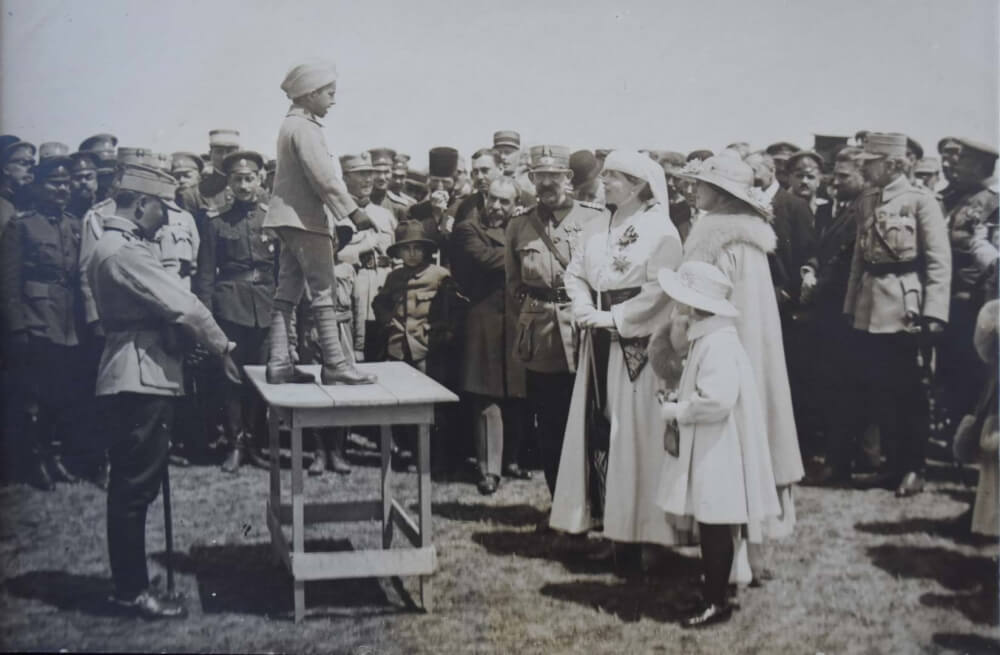
The royal family of Romania on the WW1 front
Photo source: https://centenarromania.ro
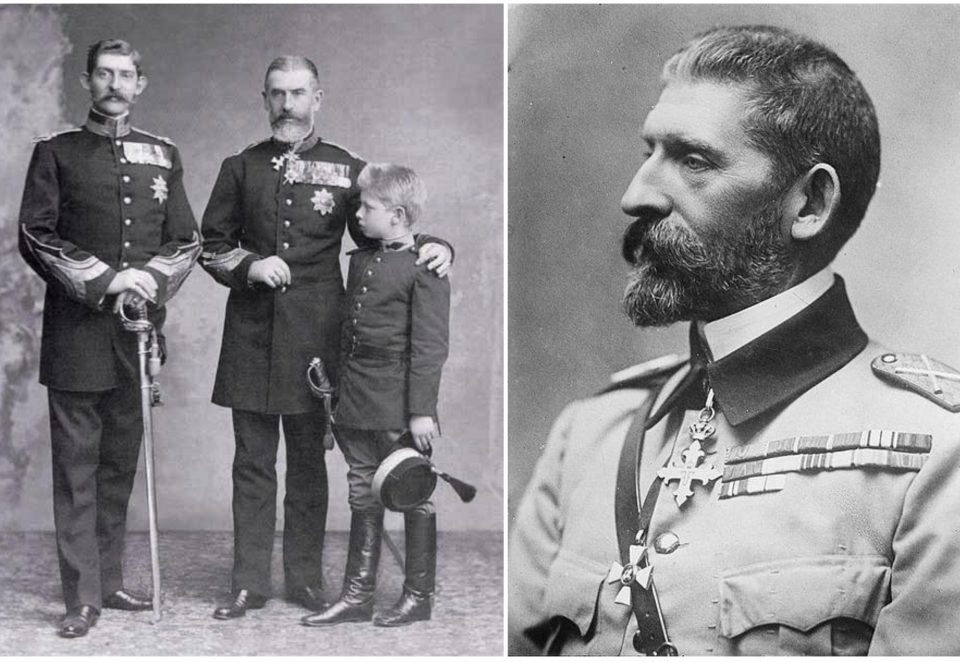
King Carol the 1st
Romania’s first king, Carol the 1st (1839-1914), opens our list of top Romanian historical figures. Prince from 1866 until 1881, crowned king after he won the independence of Romania from the Ottoman Empire (1877), Carol the 1st of Hohenzollern-Sigmaringen was an atypical chief of state for the Romanian politicians of the time.
Distant, hardworking, neutral, and completely committed to modernizing Romania, he was above the usual political intrigues of local politicians. During his time, the country rapidly developed its industry, transportation system, and modern commerce, the king remaining until his death faithful to his motto: ‘Everything for the country. Nothing for myself’.

King Carol the 1st with Prince Ferdinand and Carol II
Photo source: https://ro.wikipedia.org
King Ferdinand
The heir to the throne, Ferdinand of Hohenzollern-Sigmaringen (1865-1927) was King Carol’s nephew. Less controlling than his uncle, he became king in 1914, having to make the difficult choice of fighting against homeland Germany in WW1.
The end of the war fought with immense losses by Romania proved his sacrifice was justified. Romania’s Unifications of 1918 doubled the population and surface of the country, becoming one of the most important in Central-Eastern Europe. Important reforms were adopted during his reign (1914-1927), including the Constitution of 1923, one of the most modern of Europe of that time.
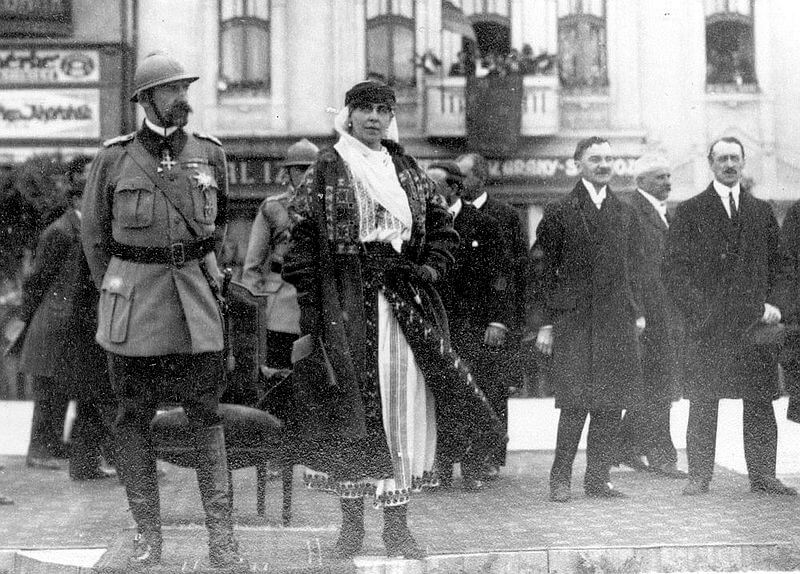
Queen Maria and King Ferdinand
Photo source: https://commons.wikimedia.org
Queen Maria
The granddaughter of Queen Victoria, Princess Marie of Edinburgh (1875-1938) married Ferdinand, the future king of Romania when she was only 17 years old. It was a marital alliance decided by their families that changed forever the life of the young English princess. After the first few difficult years of adjusting, the future Queen became one of the most important personalities of her time.
Smart, ambitious, and tireless, Queen Maria was much more than the role assigned to her. She was a central figure during WW1 when her support and daily efforts were essential for the functioning of war hospitals. The queen was relentless in fighting for the just cause of the war even when Romania was forced by the Central Powers to accept a devastating peace treaty. Thanks to her persuasion efforts, King Ferdinand never ratified this separate peace. This decision allowed Romania to remain on the Allies’ side until the end of the war.
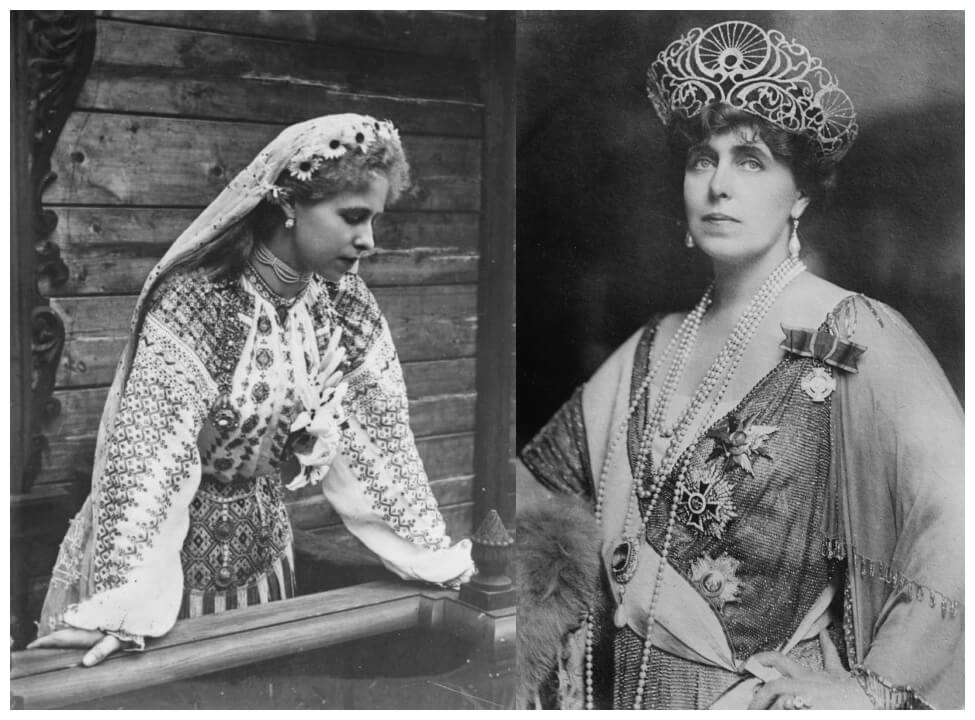
Queen Maria
Photo source: http://www.romaniaregala.ro
Worshiped by the army and the peasants, Queen Maria was already a legend at the end of the war. She was Romania’s informal representative of the Peace Conference from Paris (1919) where her reputation, connections, and devotion helped Romania secure the recognition of its new borders.
One of her favorite residences, Bran Castle, is today Romania’s most visited landmark.
King Mihai
Young Prince Mihai became king, in 1927, at only six years old, after his grandfather’s death. Dethroned by his father in 1930, Mihai (1921-2017) became king again in 1940, after his father abdicated once more. At this point, Romania had lost close to one-third of its territory during the events of WW2.
After arresting General Ion Antonescu in 1944, the de facto ruler of Romania since 1940, King Mihai declared war on Germany. He acted while German troops were still in Bucharest, trying to assassinate him. It was a courageous move that hurried the end of the war. Unfortunately, it couldn’t stop the occupation of the country by the Soviet army in the following months.

King Mihai
Photo source: http://radioromaniacultural.ro
The communists forced King Mihai to abdicate on the last day of 1947. While he tried to stop the complete overtake of Romania by the communist regime, in the the upcoming Cold War, it was, however, an impossible task.
Queen Mother Elena
A Greek princess with a dramatic destiny, Elena of Greece married Carol II, Romania’s third king in 1921. Her marriage was far from being a success, and, after 1930, she was forced into exile, having to leave her young son, future King Mihai, in the care of his father. She could only return to Romania in 1940, after her ex-husband’s abdication.
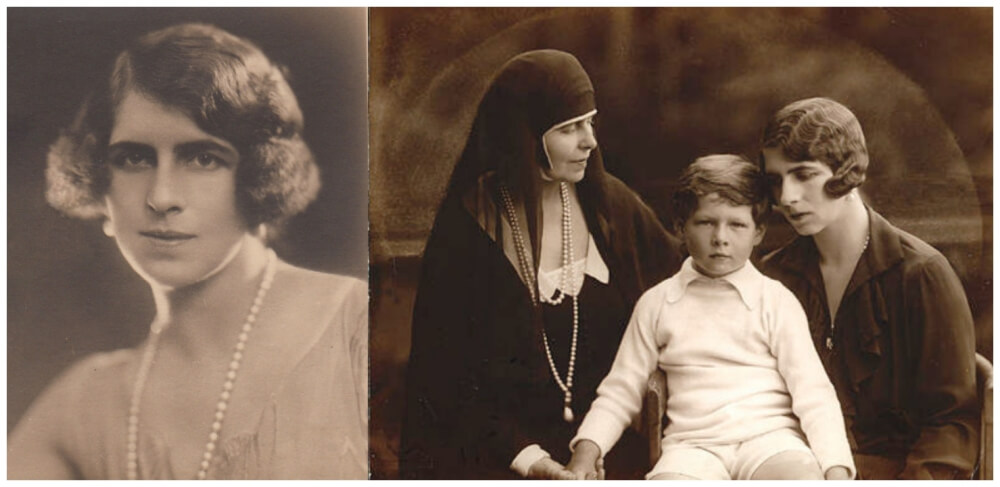
Queen Maria, Prince Mihai, and the future Queen Mother Elena
Photo source: https://ro.wikipedia.org
During WW2, Queen Mother Elena (1896-1982) used her influence to save as many Jews as possible from the Romanian Holocaust. She acted despite the heavy presence of the German army and General Ion Antonescu’s lack of sympathy for her. For her courage, she was awarded post-mortem with the Righteous Among Nations title by the State of Israel.
2. The leaders of the Great Unification
The generation of the Great Unification was probably the most remarkable in the history of Romania. Their actions led to the events of 1918 that only some believed possible at the time. Despite their fundamental role, those who were still alive after WW2 were tortured and exterminated in communist prisons. These Romanian historical figures became the main enemies of the communist regime that carried an ample process of history falsification.
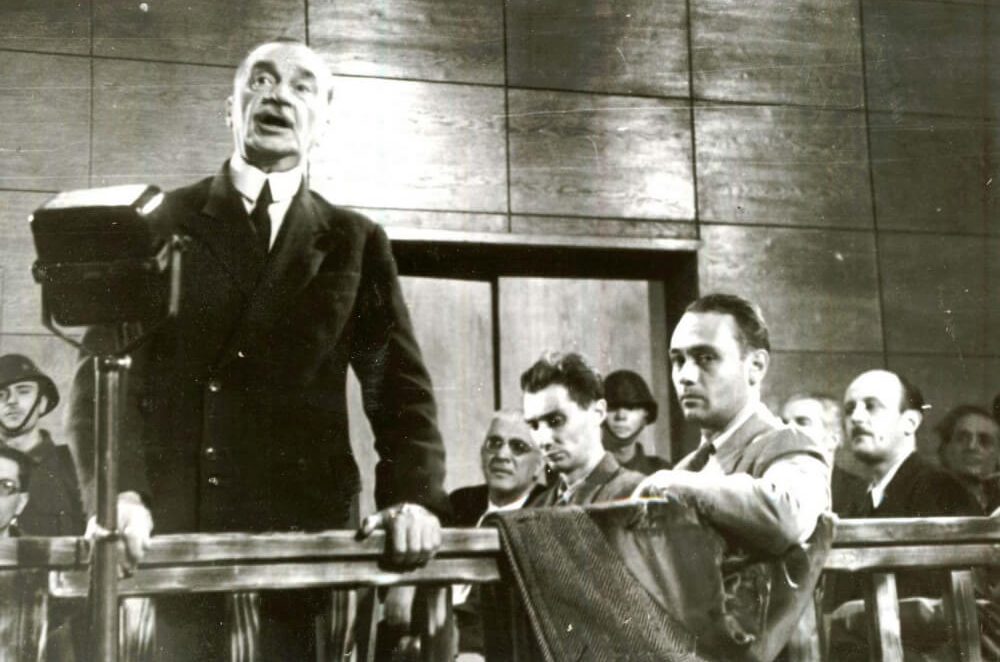
Iuliu Maniu defended himself at the staged trial organized by the communists in 1947
Photo source: Online Communism Photo Collection
Among the artisans of the Great Unification who endured the hell of communist prisons were Iuliu Maniu, Iosif Jumanca, Ion Fluieras, Emil Hatieganu, Iuliu Hossu, Alexandru Vaioda-Voievod, Ghita Popp, Aurel Vlad, Ion Mihalache, Ilie Lazar, Iosif Jumanca, Mihai Popovici, Alexandru Lepadatu, Siviu Dragomir, Ioan Pelvian, Daniel Ciugureanu, Ioan Lupas, Ion Nistor, Onisifor Ghibu, and Pantelimon Halippa.

Mihai Popovici, unrecognizable in detention
Photo source: Sighet Memorial
For the complete stories of these martyr leaders, visit https://centenarromania.ro
3. The Bratianu Family
A family of ambitious politicians, the Bratianus were a veritable dynasty with a remarkable impact on the history of Romania. They occupied top political functions and made crucial decisions. Still, like the rest of the interwar elites, their descendants didn’t escape death in communist prisons.
I.C. Bratianu (1821-1891), the patriarch, was one of the leaders of the Revolution from 1848 and was a minister for most of his life after 1859. He had a key role in bringing Carol of Hohenzollern-Sigmaringen on the throne and founded the National Liberal Party. His brother, Dumitru, was also several times minister and Parliament member, while his three sons continued the family’s political tradition.
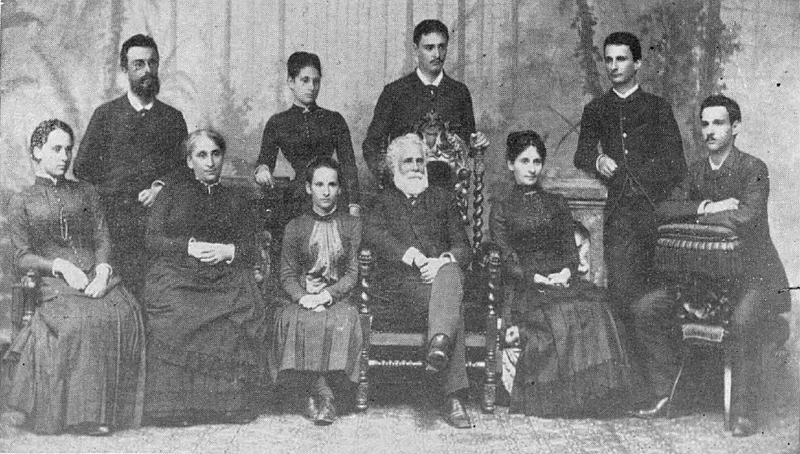
The Bratianu family
Photo source: https://ro.m.wikipedia.org
Ionel Bratianu (1864-1927) was one of the main Romanian historical figures of WW1. The leader of the National Liberal Party and Prime Minister for many years, he controlled Romania’s politics and implemented key reforms from the early 20th century until his death, in 1927.
The last Bratianu who acted as a President of the National Liberal Party, Dinu, died in the communist prison of Sighet, in 1950.
4. The Military Leaders of the Great War
Romania mobilized over 830,000 people for its army and entered the First World War in 1916, on the side of the Allies. However, in just a few months its army, government, and the royal family had to evacuate Bucharest after loosing most of its territory.
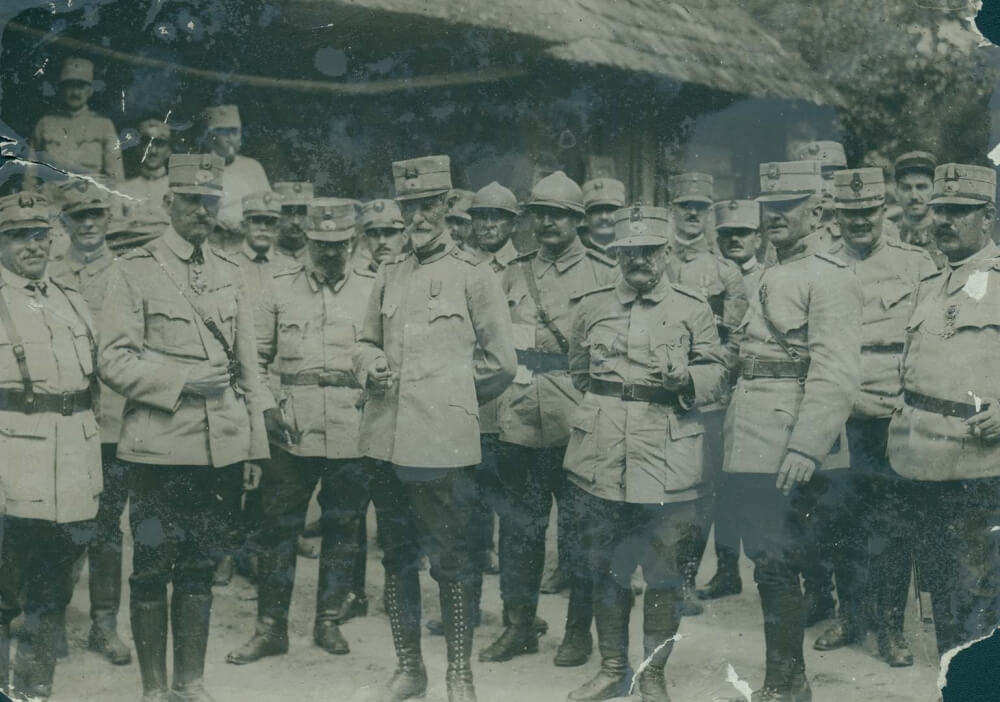
Generals Arthur Vaitoianu and Alexandru Averescu on the war front
Photo source: https://centenarromania.ro
After the disastrous start, the military resistance of 1916 and the victories of 1917 were possible under the command of great military leaders. Among them: Constantin Prezan, Eremia Grigorescu, Alexandru Averescu, Traian Mosoiu, Arthur Vaitoianu, David Praporgescu, Ioan Dragalina, Gheorghe Valeanu, Henri Cihoski, and Dumitru Stratilescu.
5. The Activists of the 1848 Revolution
This major independence movement from Moldavia and Southern Romania took place while the provinces were still under Ottoman domination. Although the revolutionary actions were unsuccessful, their advocates became the future leaders of modern Romania. Among them: Ion and Dimitrie Bratianu, C.A. Rosetti, Gheorghe Magheru, Nicolae Golescu, and Mihail Kogalniceanu.
We’re curious to know who you would add to the list of Romanian historical figures. Leave your reply in the comments section.